By six in the evening you are wired and exhausted at the same time, and by eleven you are still lying awake, buzzing, replaying a colleague's deadline as if it were yours. Then you spend a week alone somewhere quiet and sleep nine hours a night, calm by default. Something in the busy version of you was not entirely you.
The white shapes in your Human Design chart are your open centers, also called undefined centers. They are the places where you are not fixed, where you take the world in. This guide is the companion to the nine centers guide, which covered what each center does and what it means when it is defined. Here we look at the other half of the chart: the white spaces, what happens in them, and why the most tiring parts of your week probably live there.
What an open center is
Every chart shows nine centers. Some are colored in, some are white. The colored ones are your defined centers: fixed, consistent, the same whether the room is full or empty. The white ones are open: not fixed, not consistent, and not running their own energy.
Open does not mean empty, and it does not mean broken. An open center is more like an open window. Nothing is wrong with the room. But whatever is in the air outside comes in.
Here is the mechanic. When you are near someone whose center is defined, your open center takes in that energy through their aura, the energetic field every body carries. And it does not just receive it. It amplifies it. You can end up feeling someone else's emotion, pressure, or drive more intensely than the person generating it.
That is worth sitting with for a second. The strongest feelings in your day are not always yours. Some of them are the room, turned up.
Absorb and amplify: the pattern under the pattern
The absorb-and-amplify mechanic explains a set of experiences most people have never had language for:
- You feel energized in a busy office and flattened the moment you get home.
- You walk into a tense kitchen and the tension lands in your body before anyone speaks.
- Someone else's urgent question gets stuck in your head for days, even though it has nothing to do with you.
- You are a different person around different people, and you have quietly wondered if that makes you fake.
It does not make you fake. It makes you open in specific places. Where you are defined, you broadcast. Where you are open, you receive and turn up the volume. Both are part of the design. Neither is a flaw.
The library this practice draws on puts it in one line: open centers are a source of wisdom in the long run and conditioning in the short run. This guide returns to both halves of that sentence.
How to find your open centers
This part takes about a minute. Open your chart and look at the nine shapes on your bodygraph. Every white shape is an open center. Count them, name them, done.
If you do not have your chart yet, you can find your open centers now. Your first chart is free, and the app labels each center and explains it in plain language, so you are not decoding shapes on your own.
Most people have several open centers. That is normal. What matters is not the number but knowing which ones are yours, because each open center has its own signature pattern. Here are the three you are most likely to recognize.
Three common open-center patterns
The undefined Sacral: not knowing when enough is enough
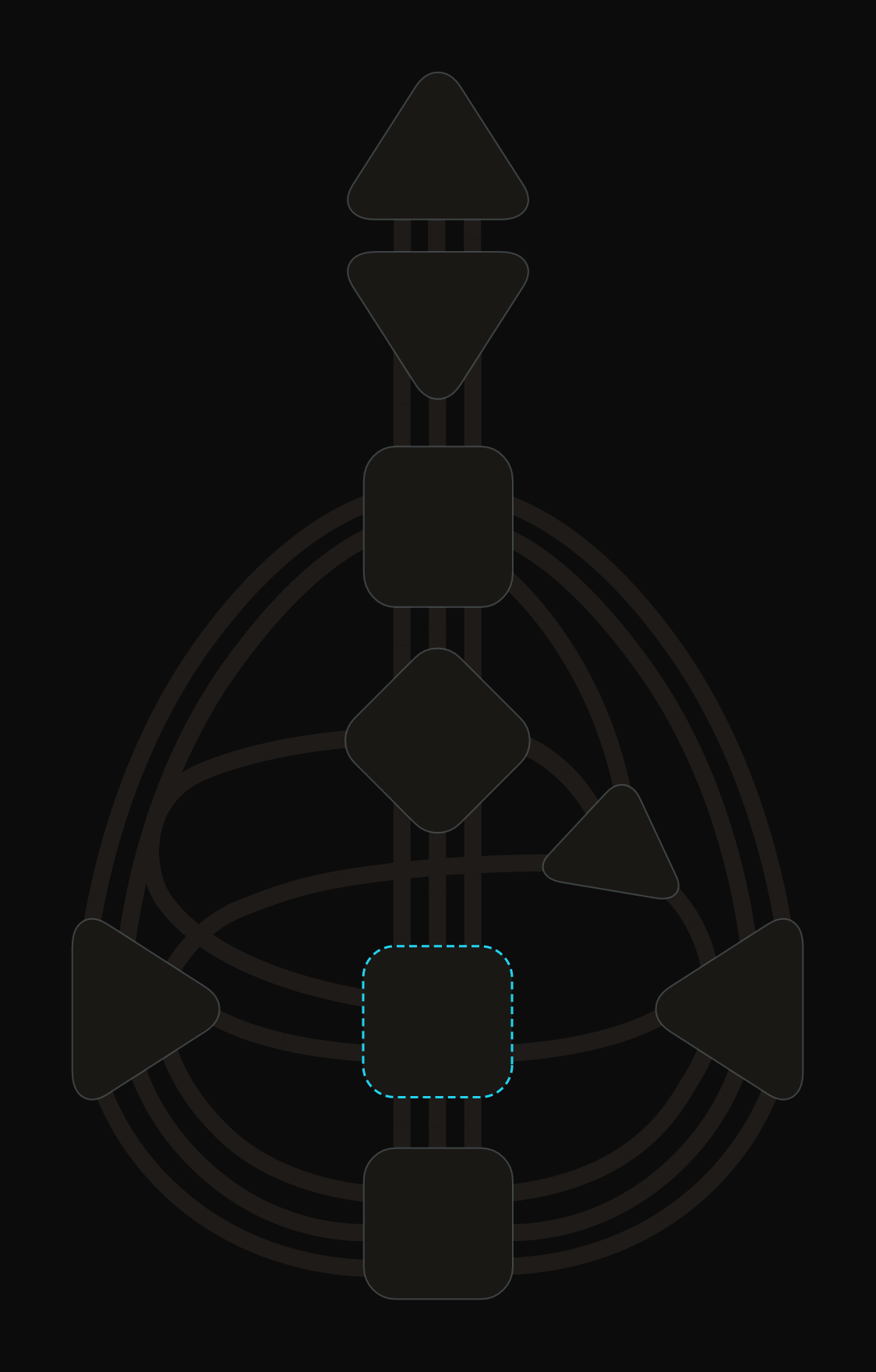
The Sacral is the body's main engine, the source of sustainable life-force energy. It is defined in roughly two-thirds of people: the Generators and Manifesting Generators. If your Sacral is white, you are in the other third, and this pattern is probably the most important one on this page for you.
An undefined Sacral absorbs and amplifies the life force of the Sacral beings around it. During the day this can feel great. You are in the office, borrowing the current of a dozen engines, keeping pace, apparently tireless. The catch is that borrowed energy is not yours, and your body has no built-in gauge for it. The classic undefined Sacral pattern is not knowing when enough is enough: staying in the conversation, the workday, the project, past the point where your own energy ran out.
Then comes eleven p.m., and the absorbed charge is still buzzing in a body that has nothing left. That was Maya's week. The practical move from the library is simple: if your Sacral is open, lie down before you are exhausted, and give your body time alone to discharge what it took in. Where possible, that includes sleeping apart from the Sacral beings you live with, or at least winding down on your own before bed.
The undefined Solar Plexus: keeping the peace at any price
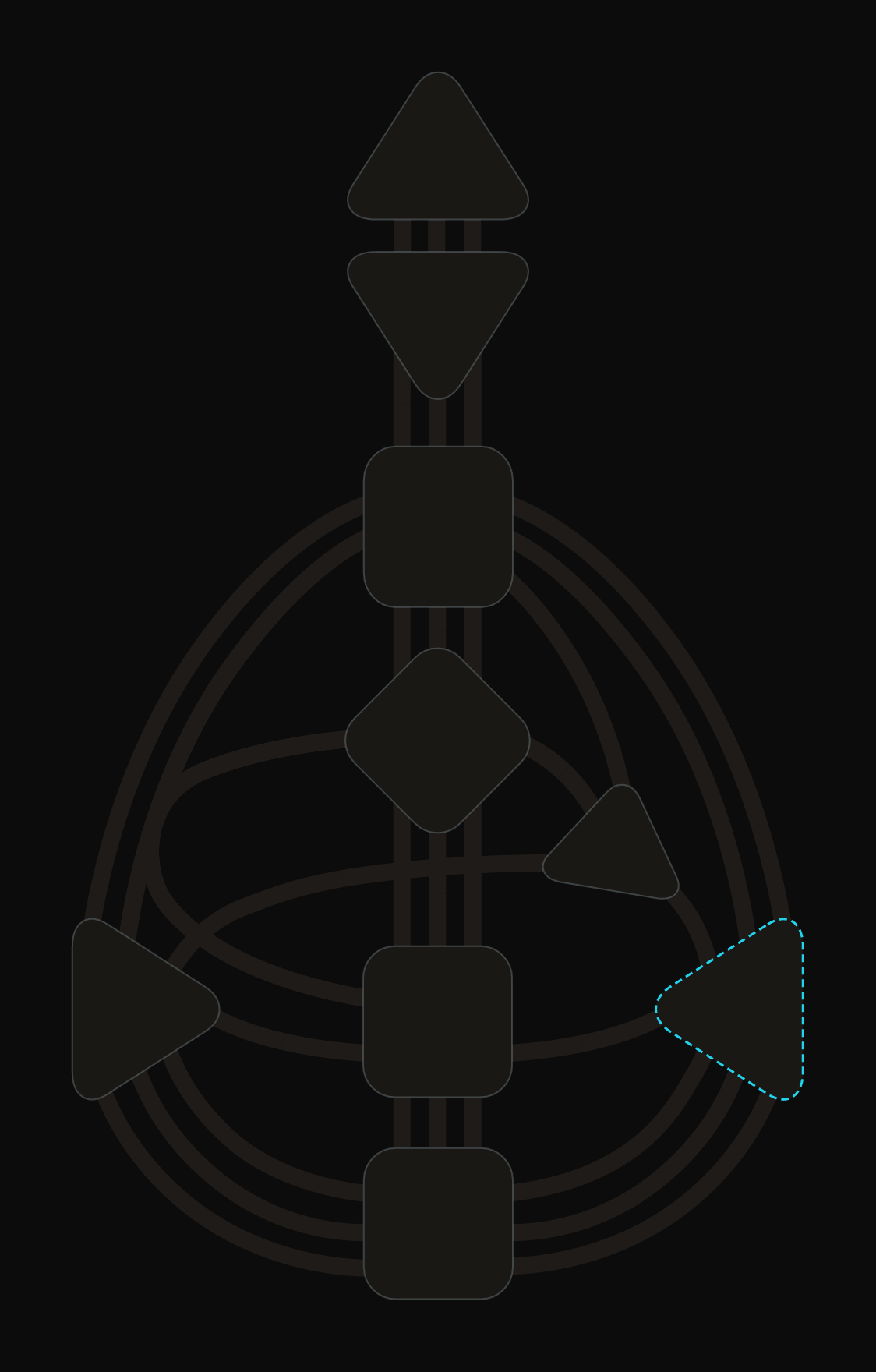
The Solar Plexus governs emotions. About half of humanity has it defined and rides a personal emotional wave that moves between hope and pain. The other half has it open, and takes in those waves from everyone nearby, often feeling them more intensely than the person the wave belongs to.
If your Solar Plexus is white, you know what a room feels like before you know what it looks like. You felt your parents' moods as a child with painful precision. And somewhere along the way you likely learned the signature move of this open center: avoiding confrontation. Not saying the true thing, not raising the issue, not making the call, because you can already feel the emotional weather it would stir, and you will feel that weather at full volume.
The cost is that truth gets postponed indefinitely to keep the field smooth. The practice, straight from the library, is to speak what is true even when it might stir the emotional field. The wave passes. It always does. And it was never yours to hold in the first place.
The undefined Head: carrying questions that are not yours
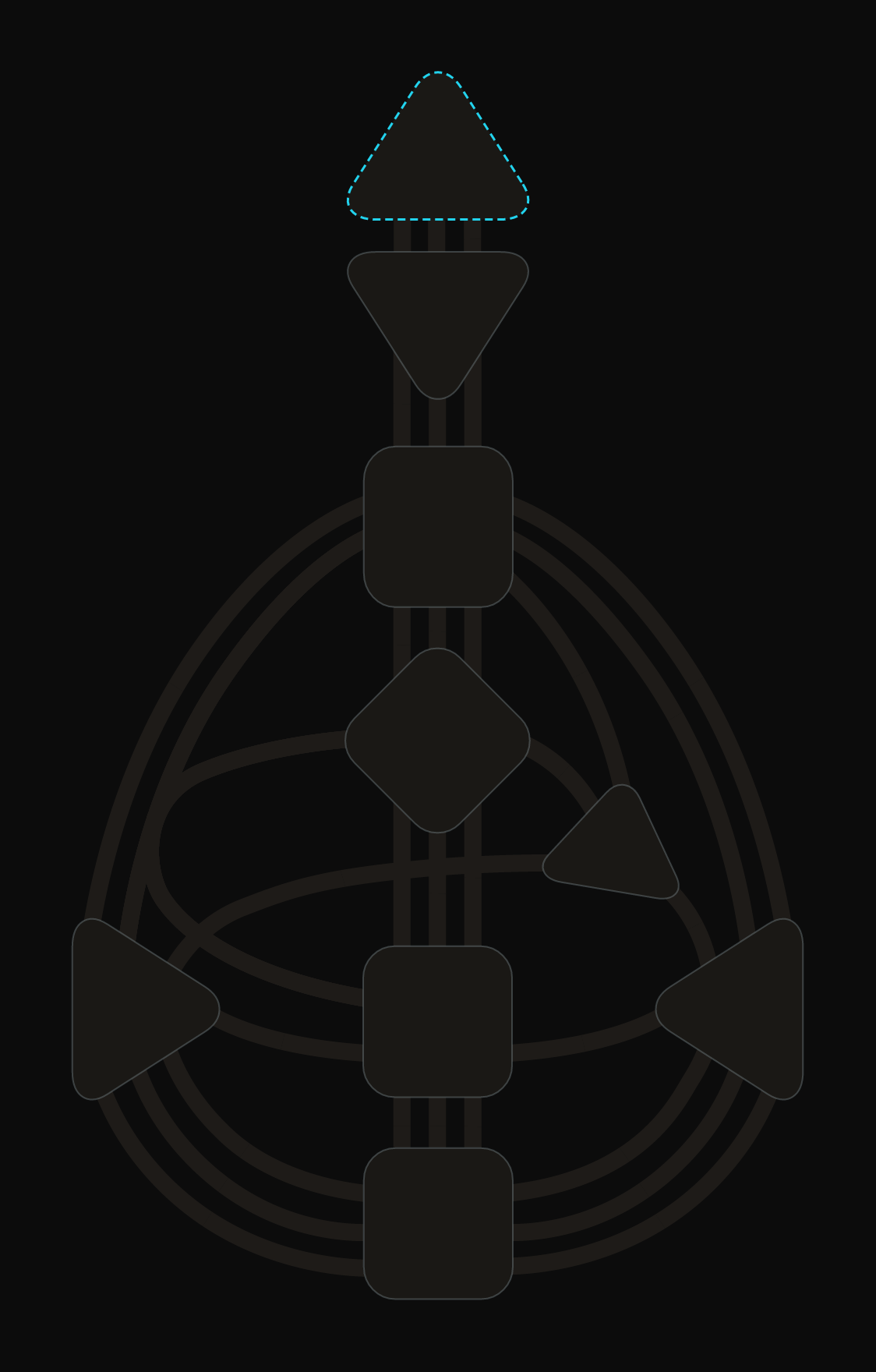
The Head center does not think. It generates the pressure to think: questions, inspiration, the itch to figure things out. Around 70 percent of people have it open, which makes this the most widely shared pattern on the page.
An open Head takes in and amplifies the mental pressure of everyone around it. A colleague wonders aloud how the project will land, and three days later the question is still circling your mind at 2 a.m., urgent and personal, even though it was never your question. That is the pattern: trying to answer questions that do not matter to you, because absorbed pressure feels identical to your own.
The unhooking move is one honest question: where did this come from? Is this my question, or did I pick it up from someone nearby? Often just asking is enough to feel the pressure loosen. You are allowed to find a question interesting without being responsible for answering it.
The long game: open centers as wisdom
Now the other half of that library sentence. In the short run, open centers are where you get conditioned. In the long run, they are where you get wise.
Think about what an open center does across a lifetime. It samples. An open Head is exposed to thousands of kinds of questions and ways of thinking. An open Solar Plexus feels the whole emotional landscape from the outside, wave after wave, without being trapped inside any of them. An open Sacral learns, eventually, what sustainable energy looks like precisely because it has borrowed so many kinds.
Defined centers know one way deeply. Open centers, given time and awareness, come to know the whole range. The people who read a room instantly, who understand how different minds work, who can sense what is driving someone before they speak: that is open-center wisdom, earned the slow way. The white spaces in your chart are not the weak parts of your design. They are where you take the world in, and taking the world in is how you come to understand it.
A first look at conditioning
There is a word for what happens when open centers run unnoticed: conditioning.
Conditioning is the slow accumulation of absorbed energy into identity. The open Sacral that never learned "enough" builds a life of overcommitment and calls it a work ethic. The open Solar Plexus that always kept the peace builds a self around being easygoing. The open Head adopts other people's questions as a career. In Human Design this borrowed self has a name, the not-self, and the library is precise about where it comes from: the not-self emerges from the open centers.
That is a bigger topic on its own, covered in the conditioning guide later in this series. For now, one idea is enough: the patterns above are not character flaws to fix. They are mechanics to notice. Your Strategy and Authority already point you toward decisions made from your own definition rather than from the noise in your open centers. Noticing is the first step, and noticing requires knowing where your open centers are.
Practical takeaway
When a feeling arrives that seems too intense for the moment it showed up in, the practice is to ask one honest question: did this start with you, or did it start with the room. An open center's signal shifts with company. Answering that question, before reacting to the feeling, is what keeps someone else's weather from being mistaken for your own.
How to start
Three steps, no belief required:
- Name your open centers. Find your open centers in your free chart. The app marks each one and its content panels explain what that specific openness means for you, in plain language, right next to the chart.
- Pick your loudest pattern. Open Sacral, open Solar Plexus, open Head, or another one. Choose the single pattern that made you wince a little reading this page.
- Watch it for one week. Do not fix anything yet. Just notice: when the tiredness, the avoidance, or the mental pressure shows up, ask whether it started with you or with the room.
That last question, asked honestly for a week, teaches you more about your chart than any article can. The map shows you where the windows are. Your week shows you what blows in.
Frequently asked questions
What does an open or undefined center mean?
An open (undefined) center is any of the nine centers that appears white in your chart. It is not fixed and does not generate its own consistent energy. Instead it takes in and amplifies the energy of people around you who have that center defined. Open centers are where you are flexible, where you learn, and where you are most affected by your environment. They are not empty and not broken.
Is it bad to have many open centers?
No. More open centers means more sensitivity to your environment and, over time, more potential wisdom about other people, because you sample so much of what moves through them. Reflectors, the rarest type, have a fully open bodygraph with all nine centers white, and their whole design is built on that sensitivity. The practical need is the same at any number: know where you are open, and lean on your Strategy and Authority so decisions come from you rather than from what you have absorbed.
What is the difference between open and undefined?
At this level of the practice, nothing. A white center is called open or undefined interchangeably, and this series uses both words for the same thing. The one special case worth knowing is the Reflector, whose bodygraph is fully open: no defined centers at all. Everything above applies center by center, whatever the label.
Why do I feel drained after being around certain people?
Because your open centers do not just receive the energy of defined centers around you, they amplify it, and your body has to process the extra charge. The clearest example is the open Sacral, which soaks up the life force of Generators during the day and is still holding it at night, wired and tired at once. The drain is information, not weakness. It tells you which centers are open and how much discharge time your body needs after being in the field.
Previous in the series: The Nine Centers. Next: Your Profile.