Du hast im Call Ja zum Projekt gesagt, und etwas in deinem Bauch wurde flach, während dein Mund den Satz noch beendete. Drei Wochen später hinkst du hinterher, bist genervt vom Kunden und erzählst einer Freundin, du bräuchtest einfach bessere Grenzen. Die Grenzen waren nie das Problem. Das Ja war es.
Wenn dir das bekannt vorkommt, bist du wahrscheinlich Generator, und das ist die mit Abstand häufigste Geschichte im Human Design.
Was ein Generator ist, in einem Satz
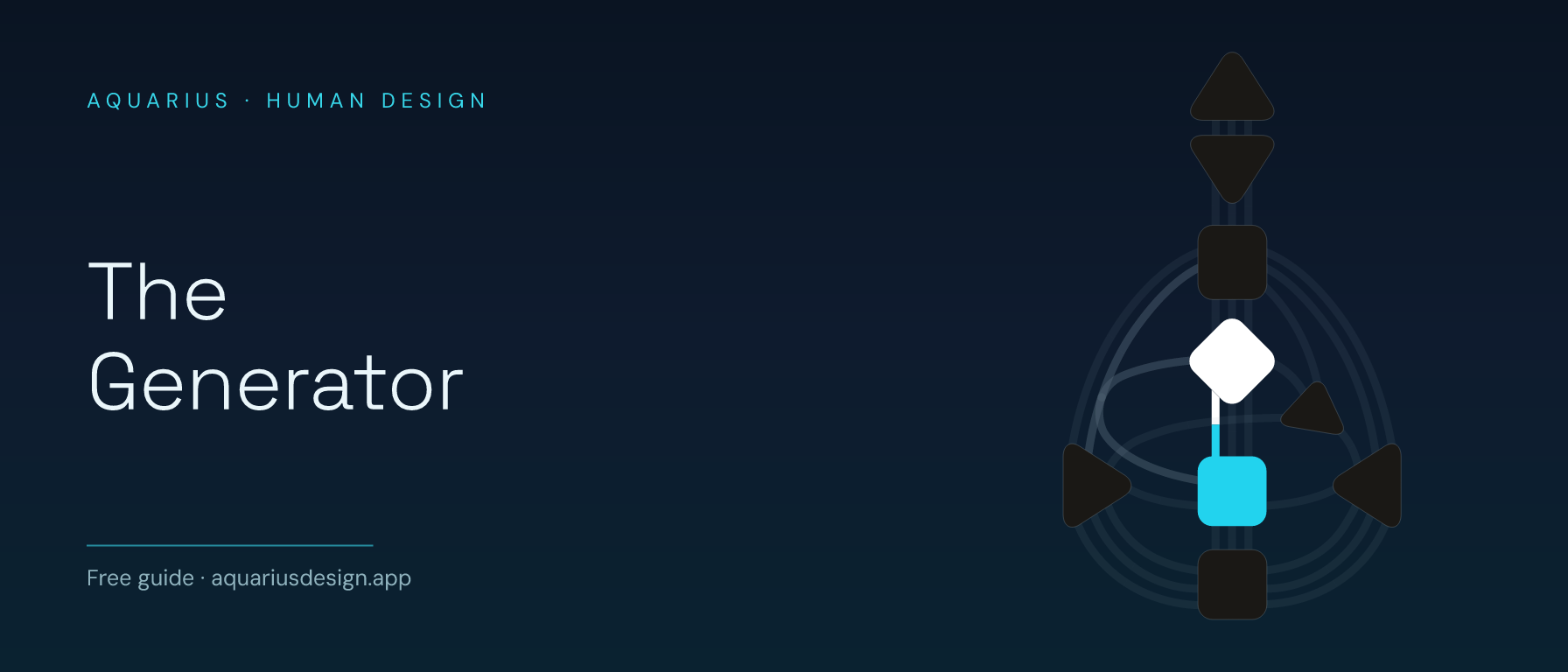
Ein Generator ist ein Mensch mit definiertem Sakralzentrum – dem Teil des Charts, der ein echtes, körperliches Ja oder Nein als Antwort auf das produziert, was das Leben vorlegt. Etwa 37 % der Menschen sind Generatoren, was ihn zum häufigsten Typ macht, und das ganze Design dreht sich um eine Anweisung: reagieren, nicht initiieren.
Diese Anweisung klingt klein. Sie ändert alles daran, wie ein Generator sich durch einen Tag bewegen sollte.
Die Aura, die die Welt zu dir zieht
Die Aura eines Generators ist offen und umhüllend. Sie drückt nicht nach außen, wie manche Typen es tun. Sie zieht herein: Menschen, Angebote, Probleme und Gelegenheiten kommen an die Tür eines Generators, ohne dass er irgendetwas tut, um sie herbeizurufen.
Deshalb fehlt es einem Generator selten an Dingen, zu denen er Ja sagen kann. Die Schwierigkeit war nie Knappheit. Sie besteht darin, dass eine offene, magnetische Aura fast alles wie eine Gelegenheit aussehen lässt – und ein Generator, der nicht gelernt hat, vor dem Antworten den Körper zu prüfen, sagt zum meisten davon Ja.
Strategie: reagieren
Human Design gibt jedem Typ eine Strategie, und die Strategie eines Generators ist zu reagieren statt zu initiieren. Initiieren heißt, etwas aus einer Kopfentscheidung heraus zu beginnen, bevor die Welt irgendetwas angeboten hat, worauf sich reagieren ließe. Reagieren heißt, zu warten, bis etwas Konkretes auftaucht, und dann zu prüfen, was der Körper damit macht.
Die Prüfung selbst wohnt im Sakralzentrum, dem definierten Bauchzentrum, das Generatoren ihren Motor gibt. Eine echte sakrale Antwort liegt näher an einem Laut als an einem Gedanken: eine aufsteigende Wärme und ein unwillkürliches „mm-hmm“ für Ja, eine flache oder sich zusammenziehende Qualität und ein „unh-uh“ für Nein. Sie kommt an, bevor das Denken beginnt, nicht danach.
Die meisten Generatoren übergehen sie jahrelang. Der Bauch wird flach, und der Verstand kommt eine halbe Sekunde später mit einem völlig guten Argument, trotzdem Ja zu sagen. Es würde dem Team helfen. Es zahlt gut. Es sind ja nur ein paar Monate. Das Übergehen ist kein Charakterfehler. Es ist das, was einem Generator passiert, dem nie gesagt wurde, dass der Bauch ein Stimmrecht hat.
Erstelle dein kostenloses Chart, um deinen Typ zu bestätigen und zu sehen, ob dein Sakralzentrum oder dein Solarplexus deine Autorität trägt – etwa die Hälfte der Generatoren entscheidet über emotionales Timing statt über einen sofortigen Bauchtreffer. Kostenlos zum Start. Dein persönliches Chart in etwa zehn Sekunden.
Signatur: Zufriedenheit
Wenn ein Generator auf etwas reagiert, zu dem das Sakralzentrum wirklich Ja gesagt hat, ändert die Arbeit selbst ihren Charakter. Sie kostet immer noch Energie. Aber der Tag endet mit etwas Verausgabtem und nichts Vergeudetem, müde, ohne ausgelaugt zu sein. Human Design nennt das Zufriedenheit, und es ist der klarste Beleg, den ein Generator hat, dass die Antwort – nicht der Plan – richtig war.
Nicht-Selbst-Thema: Frustration
Frustration ist die andere Seite desselben Instruments. Wenn ein Generator aus dem Verstand heraus initiiert, eine flache Antwort übergeht oder in einer Verpflichtung bleibt, die das Sakralzentrum nie abgesegnet hat, hat die Energie keinen richtigen Ort. Was hochkommt, ist Frustration: das Gefühl, gegen etwas zu drücken, das sich nicht bewegt, wie groß die Anstrengung auch ist.
Frustration ist kein Beweis für Faulheit und kein Zeichen, dass mehr Disziplin nötig wäre. Sie ist diagnostisch. Sie zeigt direkt auf die Entscheidungen, die aus dem Kopf statt aus dem Bauch getroffen wurden, und sie zeigt weiter darauf, bis sich eine dieser Entscheidungen ändert.
Die Fehldiagnose: nicht faul, nicht undiszipliniert
Ein Generator, der jahrelang aus dem Verstand heraus initiiert hat, kommt meist zu einem von zwei Schlüssen über sich selbst. Entweder er hält sich für faul, weil so vieles, was er übernommen hat, nie mit Begeisterung fertig wurde, oder er hält sich für schlicht zu undiszipliniert und packt noch ein Produktivitätssystem obendrauf, um das Durchhalten zu erzwingen.
Keine der beiden Diagnosen stimmt. Das Muster ist kein Persönlichkeitsmangel. Es ist ein Generator, dem nie gesagt wurde, vor einem Ja das Sakralzentrum zu prüfen, und der jahrelang ein funktionierendes Warnsystem als Charakterdefekt behandelt hat, den man härter übergehen muss. Die Korrektur ist nicht mehr Willenskraft. Es sind weniger Entscheidungen aus dem Kopf.
Das Sakralzentrum muss fertig arbeiten, damit Schlaf richtig ist
Ein mechanisches Detail überrascht die meisten Generatoren beim ersten Hören: Das Sakralzentrum muss vollständig verausgabt sein, damit Schlaf richtig funktioniert. Ein Generator, der ins Bett geht, bevor die Energie des Tages aufgebraucht ist, liegt oft wach, während der Motor weiterläuft, und hält das für Schlaflosigkeit.
Die Abhilfe ist kein Präparat und keine Routine. Sie besteht darin, etwas zu tun, worauf das Sakralzentrum reagiert hat, bis der Körper wirklich fertig ist – statt zu einer festen Stunde aufzuhören, weil die Uhr das sagt. Für einen Generator, der den Tag mit Arbeit verbracht hat, der der Bauch nie zugestimmt hat, gilt das doppelt: Die Energie, die nie richtig verausgabt wurde, hat keinen Ort, und sie hält den Kopf lange nach dem Löschen des Lichts in Bewegung.
Der Unterschied zum Manifestierenden Generator
Rund zwei Drittel der Menschen tragen ein definiertes Sakralzentrum, aufgeteilt zwischen reinen Generatoren und Manifestierenden Generatoren. Beide teilen dieselbe Strategie, dieselbe Signatur und dasselbe Nicht-Selbst-Thema. Der Unterschied ist ein direkter Kanal vom Sakral-Motor zum Kehlzentrum, der einen Manifestierenden Generator schneller von der Antwort zur sichtbaren Handlung bringt und ihn oft Schritte überspringen lässt, die ein reiner Generator der Reihe nach ginge. Wenn sich Antworten weniger wie ein einzelner klarer Schritt anfühlen und mehr wie mehrere Dinge gleichzeitig, lohnt ein Blick ins Chart auf diesen Kanal. Der Manifestierende Generator behandelt den Unterschied vollständig.
Praktische Erkenntnis
Wenn eine Anfrage oder Gelegenheit ankommt, halte inne, bevor du antwortest. Die Praxis besteht darin, zu bemerken, was der Körper in dieser ersten Sekunde tut: eine aufsteigende Wärme und ein unwillkürliches „mm-hmm“ oder ein flaches, sich zusammenziehendes „unh-uh“. Antworte daraus, nicht aus der Argumentation, die dein Kopf schon dafür baut, warum es eine gute Idee wäre.
Wie du anfängst
- Hol dir dein Chart. Erstelle dein kostenloses Chart und bestätige deinen Typ. Manche, die an der Oberfläche wie Generatoren aussehen, tragen stattdessen die Kehlverbindung eines Manifestierenden Generators.
- Finde deine Autorität. Die Übersicht zeigt, ob dein Sakralzentrum oder deine emotionale Welle bei einer Entscheidung das letzte Wort hat.
- Führe eine echte Entscheidung hindurch. Nimm etwas, das du diese Woche entscheidest, und bemerke die erste Antwort des Körpers, bevor der Verstand seine Argumentation baut.
Häufige Fragen
Was ist ein Generator im Human Design?
Ein Generator ist jemand mit definiertem Sakralzentrum, dem Bauchmotor, der ein echtes Ja oder Nein als Antwort auf das produziert, was das Leben vorlegt. Generatoren sind mit rund 37 % der Menschen der häufigste Typ, und ihre Strategie ist zu reagieren statt Dinge aus einer Kopfentscheidung heraus zu beginnen.
Was heißt reagieren statt initiieren?
Reagieren heißt, darauf zu warten, dass etwas Konkretes in der Welt auftaucht – eine Anfrage, eine Gelegenheit, eine Frage – und dann zu prüfen, was das Sakralzentrum damit macht, bevor du handelst. Initiieren heißt, etwas zu beginnen, weil der Verstand es für eine gute Idee hielt, ohne dass von außen etwas den Zug ausgelöst hätte. Generatoren stoßen auf Reibung, wenn sie initiieren, und fließen, wenn sie reagieren.
Warum sind Generatoren so oft frustriert?
Frustration taucht auf, wenn ein Generator die flache Antwort des Sakralzentrums übergeht und sich trotzdem festlegt, oder wenn der Verstand etwas initiiert, dem der Bauch nie zugestimmt hat. Das ist kein persönliches Versagen. Es ist ein Signal, das direkt auf Entscheidungen aus dem Kopf statt aus dem Körper zeigt, und es kehrt wieder, bis sich das zugrunde liegende Muster ändert.
Was ist der Unterschied zwischen Generator und Manifestierendem Generator?
Beide haben ein definiertes Sakralzentrum, dieselbe Strategie und dasselbe Nicht-Selbst-Thema. Ein Manifestierender Generator trägt zusätzlich einen direkten Kanal vom Sakralzentrum zum Kehlzentrum, der ihn schneller und manchmal außer der Reihe von der Antwort zur Handlung bringt. Der Manifestierende Generator enthält den vollständigen Vergleich.
Woher weiß ich, ob ich Generator bin?
Erstelle ein Chart aus Geburtsdatum, Geburtszeit und Geburtsort. Zeigt sich dein Sakralzentrum als definiert und hat dein Kehlzentrum keine direkte Motorverbindung, bist du ein reiner Generator und kein Manifestierender Generator. Erstelle dein kostenloses Chart, um deinen Typ in etwa zehn Sekunden zu sehen.
Sind Generatoren faul, wenn sie nicht alles zu Ende bringen, was sie anfangen?
Nein. Ein Generator, der Projekte aufgibt, ist meist ein Generator, der aus dem Verstand heraus initiiert hat, statt auf ein echtes sakrales Ja zu reagieren. Das Durchhalteproblem ist ein Antwortproblem, kein Disziplinproblem: Arbeit, zu der der Körper Ja gesagt hat, wird meist fertig, weil sie unterwegs Zufriedenheit statt Frustration erzeugt.
Vorher: Dein Profil: die 12 Arten, der Welt zu begegnen. Als Nächstes in der Reihe: Der Manifestierende Generator: Tempo, Abkürzungen und der Informier-Schritt.